
Mindray
-
Patient Monitoring & Vital SignsView details
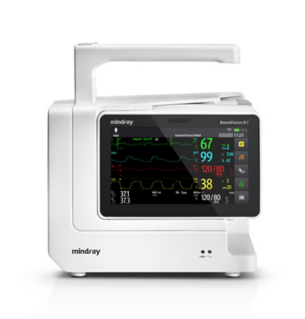
Mindray BeneView TDS monitoring system
BeneView TDS is a monitoring system that combines bedside, transport and modular workflows. The source describes standalone modular monitoring with a 19-inch touchscreen, wireless mobile monitoring and a plug-and-play MPM module. This is one system-family listing: the 19-inch standalone arrangement is distinct from the smaller BeneView T1 module/transport monitor.[7]
-
Patient Monitoring & Vital SignsView details
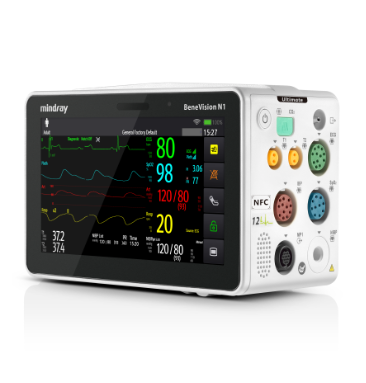
Mindray BeneVision N1 patient monitor
The BeneVision N1 is a compact Mindray patient monitor. Depending on the selected configuration and compatible Mindray components, it can support monitoring during transport and work in several bedside roles.
-
Patient Monitoring & Vital SignsView details
Mindray BeneVision N17/N15/N12 patient monitors
A high-acuity patient monitor family with configurable display, parameter and connectivity options. The appropriate model and configuration depend on the department, monitoring requirement and destination market.
-
Patient Monitoring & Vital SignsView details
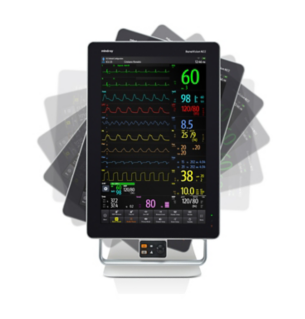
Mindray BeneVision N22/N19 patient monitors
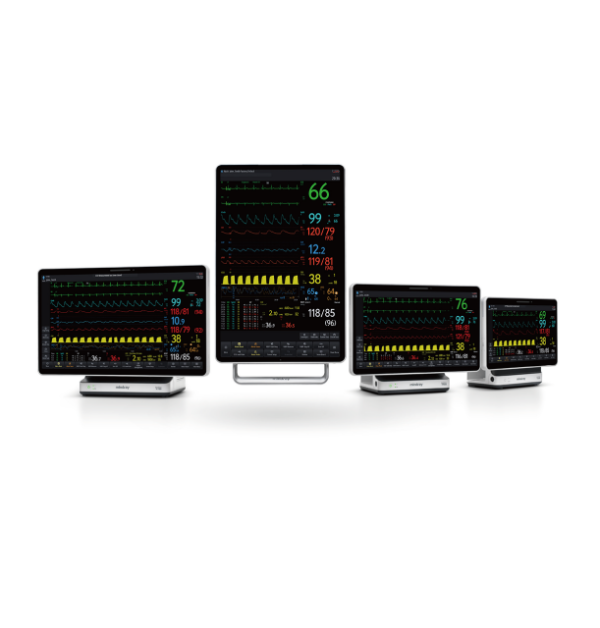
BeneVision N22/N19 is a patient monitor family combining a touchscreen interface with plug-and-play modules. Its screen can rotate between landscape and portrait layouts, while the main unit has a slim design. This single family listing covers N22 and N19; selection should identify the intended model and the measurement and information-system functions required for the bedside workflow.[4]
-
Patient Monitoring & Vital SignsView details
Mindray BeneVision TM80 telemetry patient monitor
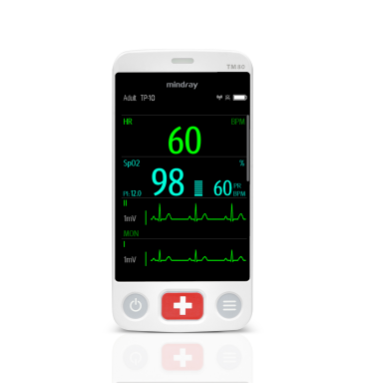
BeneVision TM80 is a compact telemetry patient monitor for ambulatory patients within a wireless network. It uses Mindray MWAN wireless technology. Its documented measurement functions cover ECG, respiration and SpO2; NIBP monitoring requires pairing with the BP10 module through MPAN. That module relationship should remain explicit when defining the system.[9]
-
Patient Monitoring & Vital SignsView details
Mindray BeneVision V Series patient monitors
BeneVision V Series is a patient monitoring family with a wireless bedside ecosystem. Its documented connectivity includes Bluetooth, NFC and Wi-Fi 6, together with wireless extended display technology. The family supports workflows that bring monitoring and ultrasound information to the bedside display; the connected devices and software functions should be specified as part of the system configuration.[3]
-
Clinical ChemistryView details
Mindray BS-600M – Clinical chemistry analyzer
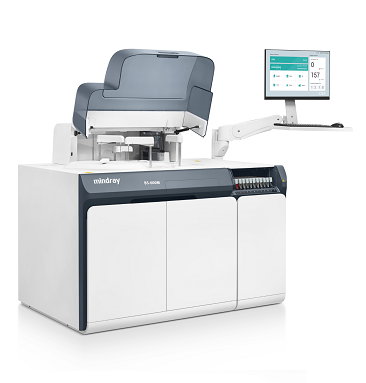
The BS-600M is a clinical chemistry analyzer with continuous sample loading by racks and up to 120 sample positions. The page describes automatic priority for STAT samples and reruns.5
-
Digital RadiographyView details
Mindray DigiEye 680 – Digital radiography system
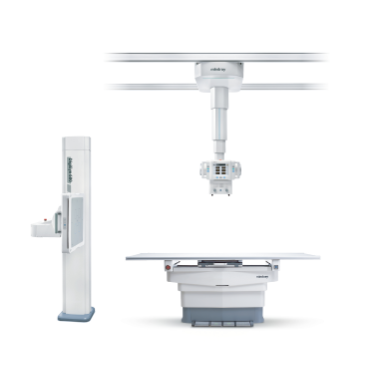
The DigiEye 680 is a digital radiography system. The source describes a one-button control box for starting or shutting down the whole system, and movement control through an RF remote, including from the console room.2
-
Patient Monitoring & Vital SignsView details
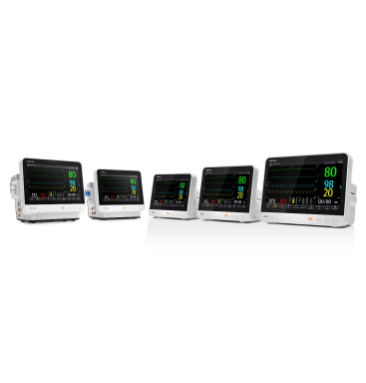
Mindray ePM Series patient monitors
The Mindray ePM Series is a patient monitor family for hospital environments. Mindray’s current product page shows compact and modular configurations and identifies emergency rooms, recovery units, sub-acute units and general wards among the intended settings.
-
Patient Monitoring & Vital SignsView details
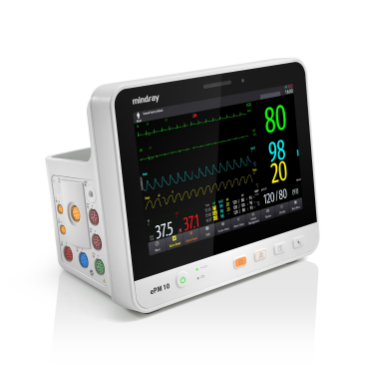
Mindray ePM10 transport patient monitor
ePM10 is a compact patient monitor designed for transport monitoring. The product description identifies support for a carrying handle, several mounting options and battery-powered operation for up to six hours. These physical provisions are relevant when planning how the monitor will be carried, mounted and powered during patient movement.[6]
-
Operating TablesView details
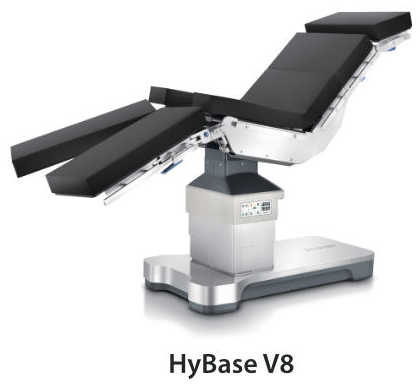
Mindray HyBase V8 – Operating table
This selection is for the HyBase V8 operating table. The manufacturer’s family page covers HyBase V9, V8 and V8 Classic together, so the exact V8 configuration requires confirmation.6
-
Patient Monitoring & Vital SignsView details
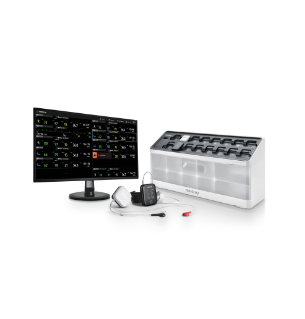
Mindray mWear wearable patient monitor
mWear is a wearable patient monitor with wireless interconnection and a ring SpO2 sensor. Its workflow spans preparation, patient monitoring, charging and device management. The manufacturer’s page describes multi-parameter monitoring, but does not enumerate a complete physiological parameter set; the ring sensor and the named activity functions provide the clearest basis for specifying this listing.[8]